Abstract
A dust collector can look “fine” on the outside while quietly bleeding performance on the inside—bags blinding early, differential pressure drifting up, compressed air consumption spiking, and unplanned shutdowns becoming a routine “maintenance story.” In many systems, the root cause is not the filter media, not the fan, and not even the controller. It’s the pulse-jet cleaning loop—and at the heart of that loop sits the ASCO Pulse Valve.
This guide explains how pulse valves actually influence cleaning energy, bag life, and operating cost; how to select the right valve configuration; and how to troubleshoot the most common pain points (leaks, weak pulses, diaphragm failures, icing, and coil burnouts). You’ll also find a practical checklist, maintenance schedule, and an FAQ section written for procurement teams, plant engineers, and service technicians who need results—not marketing fog.
Key takeaways
- Pulse strength is a system outcome (valve + tank + pipework + nozzle + timing), but the valve sets the ceiling.
- “Right size” is not just port diameter—response time and flow characteristics matter for real cleaning energy.
- Most failures are predictable: moisture, poor air quality, incorrect voltage, over-pulsing, and installation errors.
- A disciplined inspection schedule costs far less than bags, downtime, and compressed air waste.
Table of Contents
- Article Outline
- What an ASCO Pulse Valve Does in a Pulse-Jet System
- Customer Pain Points This Component Directly Solves
- Selection Guide: How to Choose the Right Valve
- Quick Spec & Decision Table
- Installation Practices That Prevent 80% of Problems
- Troubleshooting: Symptoms, Causes, Fixes
- Maintenance Schedule for Predictable Performance
- Sourcing & Documentation for Confidence
- FAQ
Article Outline
- Define the pulse valve’s job in real operational terms (not textbook terms).
- Map common plant complaints to pulse performance and valve behavior.
- Provide a practical selection framework (ports, pressure, response, voltage, environment).
- Share installation and commissioning practices that reduce avoidable failures.
- Offer a symptom-based troubleshooting chart for quick diagnosis.
- Wrap with a maintenance schedule and procurement documentation checklist aligned with expectations.
What an ASCO Pulse Valve Does in a Pulse-Jet System
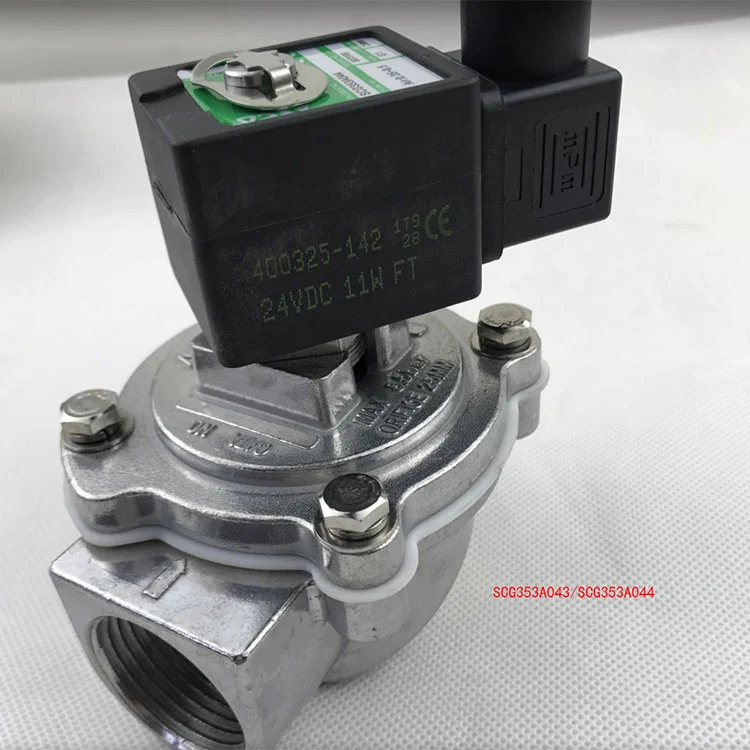
In a pulse-jet baghouse (or cartridge dust collector), cleaning happens when a short burst of compressed air travels through a blowpipe and into each filter row. That burst must be fast (sharp rise time), strong (enough air mass), and repeatable (consistent cycle after cycle). The pulse valve is the “gate” that releases stored air from the header/tank into the blowpipe in a controlled, high-energy shot.
What you get when the valve is doing its job
- Stable differential pressure: Your DP doesn’t drift upward week after week.
- Longer filter life: Bags clean effectively without being “over-pulsed” to death.
- Lower compressed air costs: You pulse less often because each pulse actually works.
- Predictable production: No surprise plugging events during peak shifts.
Reality check: Many sites blame filter media first. But if the pulse is weak, even “premium” media will blind early. An ASCO Pulse Valve (properly selected and installed) often fixes the underlying cleaning energy deficit that media changes can’t.
Customer Pain Points This Component Directly Solves
If you’re searching “ASCO Pulse Valve,” chances are you’re not doing it for fun—you’re reacting to symptoms. Here are the pain points that tend to trace back to pulse valve performance or compatibility:
Pain point: Differential pressure keeps climbing
Often caused by weak pulses (slow valve response, undersized ports, restricted blowpipe/nozzles, or insufficient tank pressure).
Pain point: Bags fail early or tear near the top
Sometimes it’s “too much cleaning” rather than too little—incorrect timing, excessive pulse frequency, or unstable pulse shocks from poor valve behavior.
Pain point: Compressed air bills look ridiculous
Leaky diaphragms, poor sealing, or using pulses to compensate for system issues can burn air continuously.
Pain point: Random downtime in cold or wet seasons
Moisture + temperature swings can cause sticking, slow response, icing, and coil/solenoid stress if air quality management is weak.
The hidden cost people underestimate
The biggest cost is rarely the valve itself. It’s production disruption, maintenance overtime, premature bag sets, and energy waste. Treat the pulse valve as a reliability component, not a commodity part.
Selection Guide: How to Choose the Right Valve
Selecting an ASCO Pulse Valve is less about chasing a brand label and more about matching valve behavior to your dust collector design. Use this framework to avoid “it fits the pipe, so it must be fine” mistakes.
1) Match port size to cleaning demand (not guesses)
- Collector size and filter count: More filters typically require higher pulse air volume or optimized timing.
- Blowpipe/nozzle configuration: Restrictions downstream can neutralize a larger valve.
- Target pulse duration: A strong pulse delivered quickly often outperforms a long, lazy pulse.
2) Confirm working pressure window
Many systems run around 0.4–0.6 MPa (4–6 bar), but your actual “effective” pressure depends on losses in the tank, piping, and fittings. A valve that’s happy in your real pressure window will pulse consistently; a mismatch can cause weak cleaning or diaphragm stress.
3) Check solenoid coil voltage and duty expectations
- Voltage: Make sure your controller output matches coil specs (AC/DC and exact voltage).
- Environment: Heat, dust, and vibration demand robust coil protection and proper wiring practices.
- Pulsing frequency: High-frequency pulsing can overheat coils if the system is misconfigured.
4) Choose materials for your dust and climate
Dust collection environments vary wildly: cement, woodworking, steel, chemical, food-grade, high humidity, sub-zero winters. The valve body material and diaphragm quality should match the conditions to avoid swelling, cracking, or sticky operation.
Selection checklist (print this)
- Port size and connection type (threaded/flanged, in-line/angle type)
- Working pressure range and available tank volume
- Coil voltage (AC/DC), connector type, and controller output
- Ambient temperature range and moisture level
- Air quality level (oil/water content) and filtration strategy
- Required service access (diaphragm kit availability, rebuildability)
Quick Spec & Decision Table
Use this table as a quick decision support tool. It’s not a substitute for engineering design, but it will keep procurement aligned with what actually matters.
| Decision factor | What to verify | If ignored, you may see | Practical tip |
|---|---|---|---|
| Port size | Valve port vs. blowpipe/nozzle restrictions | Weak pulses, rising DP | Bigger isn’t always better if downstream is choked |
| Response time | Fast opening/closing behavior | “Soft” pulse that doesn’t snap cake off | Prioritize repeatability for stable cleaning |
| Pressure window | Real pressure at the tank under load | Under-cleaning or diaphragm stress | Measure pressure during pulsing, not only at idle |
| Coil voltage | AC/DC, exact voltage, connector type | Coil overheating, misfires | Match controller output; avoid “close enough” voltage swaps |
| Air quality | Water/oil content; filtration and drainage | Sticking, leaks, icing, rapid diaphragm wear | Treat air like a process fluid—clean and dry wins |
Installation Practices That Prevent 80% of Problems
Most “bad valve” complaints are actually system installation or commissioning issues. If you want your ASCO Pulse Valve to behave like a reliability part, treat installation like a reliability task.
Do these during installation
- Keep piping clean: Flush lines before mounting. Tiny debris can damage sealing surfaces.
- Use correct sealing methods: Avoid over-tightening threaded connections that can distort alignment.
- Support pipework: Don’t let heavy blowpipes hang on the valve body.
- Confirm coil grounding and protection: Stable power and correct wiring prevent burnouts.
- Validate pulse timing: Start conservative; adjust based on DP trends and dust behavior.
Avoid these common mistakes
- Skipping moisture management (no drain strategy, no dryer, no water separator).
- Increasing pulse frequency to “fix” rising DP without checking root causes.
- Mixing coil voltages across one collector after a quick parts replacement.
- Ignoring blowpipe/nozzle blockage—then blaming the valve for weak pulses.
Troubleshooting: Symptoms, Causes, Fixes
When a dust collector misbehaves, speed matters. Use the symptom-first approach below to narrow down what’s happening before you swap parts blindly.
| Symptom | Likely cause | Fast checks | Fix |
|---|---|---|---|
| Weak pulse / poor cleaning | Low tank pressure, restricted blowpipe/nozzle, slow valve response | Check pressure during pulsing; inspect nozzle holes; listen for “sharp” pulse sound | Restore pressure; clear restrictions; verify correct valve/coil specs |
| Continuous air leakage | Diaphragm wear, debris on seat, sealing damage | Soap test on joints; isolate valve to confirm leak source | Replace diaphragm kit; clean seat; improve air filtration |
| Valve misfires / irregular pulsing | Voltage mismatch, loose wiring, controller output issue | Measure coil voltage under load; inspect connectors and grounding | Correct wiring; use proper coil; check controller channels |
| Diaphragm fails too often | Moisture/oil contamination, over-pulsing, wrong material for temperature | Drain moisture; inspect air filters; review pulse frequency settings | Dry/clean air; optimize timing; choose diaphragm material suited to climate |
| Cold-weather sticking / icing | Water in air line, freezing at valve body | Check drains; look for water in tank; monitor dew point | Improve drying; insulate; adjust compressor and drain strategy |
Pro tip: If DP rises but pulses “sound normal,” don’t stop there—check nozzle alignment and blowpipe hole condition. A perfect valve can’t compensate for a partially blocked blowpipe.
Maintenance Schedule for Predictable Performance
You don’t need to “baby” a pulse valve, but you do need a repeatable routine. The goal is to catch small issues before they become shutdowns.
| Interval | What to do | What it prevents |
|---|---|---|
| Daily / per shift | Drain moisture; check air pressure stability; quick DP glance | Icing, sticking, weak pulses, surprise DP spikes |
| Weekly | Listen for abnormal leak sounds; inspect wiring and connectors | Air waste, coil misfires, intermittent faults |
| Monthly | Spot-check blowpipe/nozzles; verify pulse timing settings | Under-cleaning, over-cleaning, uneven row loading |
| Quarterly / semi-annual | Inspect diaphragm condition (as needed); audit air filtration performance | Sudden leaks, frequent rebuilds, unstable pulse energy |
If your plant runs harsh dust or extreme climates, shorten the inspection cycle. Reliability is always cheaper than emergency.
Sourcing & Documentation for Confidence
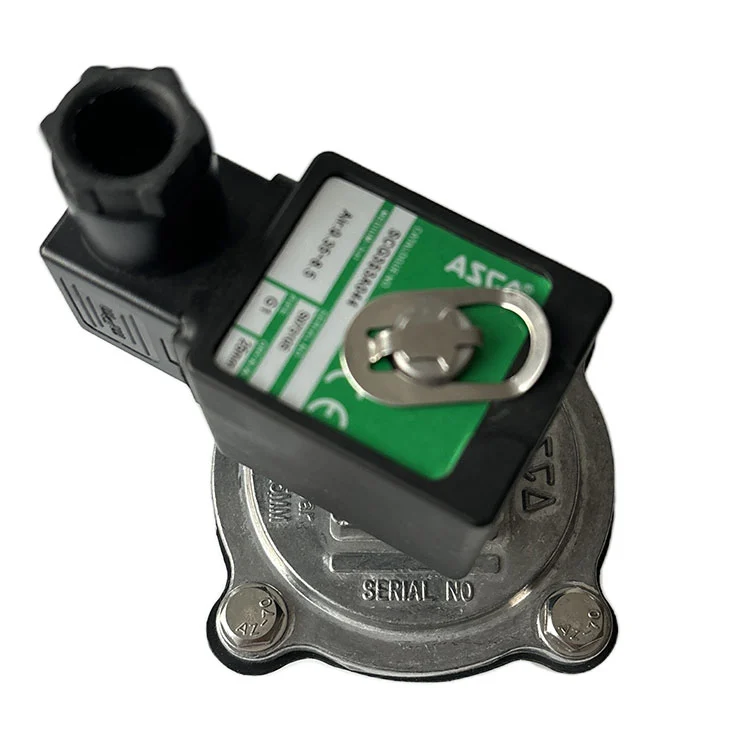
When you source an ASCO Pulse Valve (or compatible replacements), ask for documentation that supports predictable use in your environment.
What serious buyers should request
- Clear specification sheet: connection type, pressure range, coil voltage, and service kit details.
- Material and compatibility notes: diaphragm options for temperature and air quality.
- Quality traceability: batch identification, inspection records, and packaging integrity.
- Service support: guidance on installation, timing, troubleshooting, and rebuild intervals.
Where Qingdao Star Machine Technology Co.,Ltd. fits in
At Qingdao Star Machine Technology Co.,Ltd., our team supports dust-collection projects with pulse-jet components and practical engineering guidance—especially for buyers who want fewer surprises after installation. If you’re trying to stabilize DP, cut compressed air waste, or reduce unplanned baghouse downtime, we can help you validate selection factors (port configuration, coil voltage, air quality strategy) and match them to your operating conditions.
About this guide
This article is written as a field-practical reference for dust collection operation and maintenance. Always follow your site safety procedures, lockout/tagout requirements, and equipment manuals when inspecting or servicing pulse valves.
FAQ
How many times should a pulse valve fire per minute?
There’s no universal number. Start with conservative timing based on your dust loading and target DP range, then tune from data. If you’re pulsing aggressively just to keep DP from climbing, that’s a signal to check air pressure stability, blowpipe restrictions, and whether the valve’s response and sizing match the collector.
What causes a pulse valve to leak continuously?
Common causes include diaphragm wear, debris on the sealing surface, air contamination (oil/water), or seat damage. Continuous leakage wastes compressed air and can mask other issues because the system never fully “rests” between pulses.
Is a bigger port size always better?
Not always. If your blowpipe, nozzles, or fittings are restrictive, a bigger valve won’t deliver a proportional improvement. What you want is the right combination of fast response, adequate flow, and a downstream path that can actually use that air efficiently.
Why do coils burn out on dust collectors?
Voltage mismatch, unstable power, incorrect wiring, excessive pulsing frequency, or heat buildup can all contribute. Verify coil specs against controller output, protect wiring from vibration, and avoid using rapid pulsing as a substitute for fixing root-cause cleaning issues.
When should a diaphragm kit be replaced?
Replace when you see leakage, weakened pulses, slow response, or visible diaphragm wear during inspection. If your environment has high moisture or poor air quality, rebuild intervals may be shorter—improving air filtration and drainage can dramatically extend diaphragm life.
Final Thoughts
A dust collector is only as reliable as its cleaning system. If your DP is unstable, bags are failing early, or compressed air costs feel out of control, focusing on the pulse-jet loop—and selecting the right ASCO Pulse Valve configuration—often delivers the fastest ROI.
Ready to stop guessing?
Share your dust collector basics (filter type/count, tank pressure, blowpipe layout, coil voltage, and site climate), and we’ll help you narrow down a stable, cost-effective valve setup. If you want fewer shutdowns and more predictable DP, contact us and let’s make your cleaning system behave like it should.