Which G353A046 1.5 Inch Dual Stage Pulse Valve Features Matter Most for Reliable Dust Collector Performance?
Industrial dust collection systems depend on consistent compressed air pulses to remove accumulated dust from filter bags and cartridges. When a pulse valve fails to deliver sufficient airflow or respond accurately to control signals, filter cleaning becomes less effective, potentially increasing differential pressure, energy consumption, and equipment maintenance costs.
The G353A046 1.5 Inch Dual Stage Pulse Valve is designed for industrial dust collector applications that require rapid pneumatic operation, reliable diaphragm performance, and effective filter cleaning. Understanding its construction, operating principle, technical characteristics, and installation requirements helps equipment manufacturers and maintenance professionals make more informed purchasing decisions
.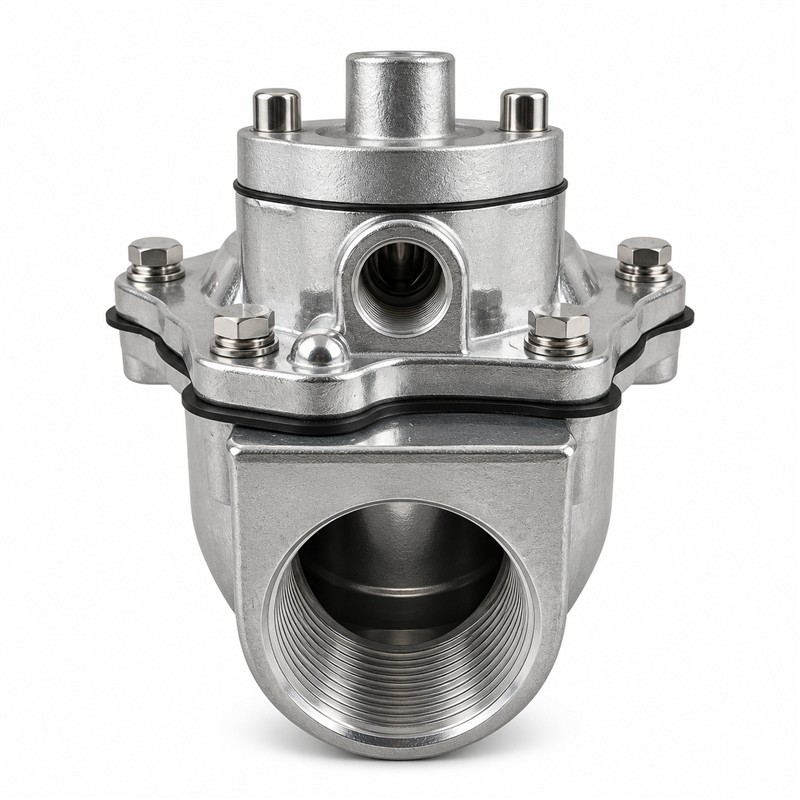
Table of Contents
- Understanding the G353A046 Pulse Valve
- How Does the Dual Stage Pulse Valve Work?
- Key Features and Performance Advantages
- Technical Specifications
- Industrial Applications
- How to Select the Right Pulse Valve
- Installation and Maintenance Guidelines
- Common Problems and Troubleshooting
- Why Choose a Reliable Pulse Valve Supplier?
- Frequently Asked Questions
- Conclusion
1. Understanding the G353A046 1.5 Inch Dual Stage Pulse Valve
A pulse jet valve is an essential pneumatic component in industrial dust collection equipment. Its primary function is to release a short, powerful burst of compressed air into filter bags or cartridges, helping remove accumulated dust from their surfaces.
The G353A046 1.5 Inch Dual Stage Pulse Valve belongs to the 353 series of industrial diaphragm pulse valves. It features a 1.5-inch threaded main connection and a remote pilot operating arrangement. The dual-diaphragm design allows the valve to control the release of compressed air through a rapid opening and closing process.
Unlike an ordinary electrically actuated valve with an integrated solenoid coil, the remote-pilot G353A046 uses an external pilot control arrangement. A separate pilot solenoid valve supplies the control signal, which makes the configuration useful in systems where pilot controls are installed separately from the main compressed-air valves.
Why Is This Valve Important for Dust Collection?
Dust gradually accumulates on filter media during normal operation. Without effective cleaning, the dust layer restricts airflow and increases resistance throughout the filtration system.
A suitable pulse valve helps address these problems by delivering compressed air at the required intervals. Proper pulse cleaning can help:
- Remove accumulated dust from filter surfaces.
- Maintain more consistent airflow through the filtration equipment.
- Reduce excessive pressure drop across filter media.
- Support continuous industrial production.
- Reduce unnecessary filter cleaning interruptions.
- Improve the overall operating efficiency of dust collection equipment.
For maintenance teams and equipment manufacturers, selecting a correctly sized pulse valve is therefore an important part of designing a reliable dust removal system.
2. How Does the Dual Stage Pulse Valve Work?
Understanding the operating principle of the G353A046 helps explain why diaphragm construction and pilot control are important to dust collector performance.
Step 1: Compressed Air Enters the Valve
Compressed air enters the main valve through its 1.5-inch inlet connection. Under normal operating conditions, the diaphragm assembly keeps the main air passage closed, preventing continuous air discharge into the cleaning pipe.
Step 2: The Pilot Valve Receives a Control Signal
The external pilot solenoid valve receives a signal from the dust collector pulse controller. It then changes the pilot air pressure acting on the diaphragm control chamber.
This pressure change allows the main diaphragm assembly to move from its closed position toward the open position.
Step 3: The Main Valve Opens Rapidly
Once the diaphragm moves, compressed air is released through the main valve outlet. The resulting high-volume air pulse travels through the blowpipe and enters the filter bags or cartridges.
The sudden expansion of compressed air produces a reverse-flow cleaning effect that helps dislodge accumulated dust from the filter surfaces.
Step 4: The Diaphragm Returns to Its Original Position
When the pilot signal ends, the pressure conditions inside the valve change again. The diaphragm returns to its closed position, stopping the compressed-air discharge.
The valve then remains ready for the next cleaning cycle.
Important operating consideration:
The efficiency of a pulse cleaning system depends on more than the valve itself. Air tank capacity, pipeline diameter, compressed-air quality, pulse duration, blowpipe alignment, and filter design all influence actual cleaning performance.
3. Key Features and Performance Advantages
When purchasing an industrial pulse valve, buyers should evaluate its construction and operating characteristics rather than focusing only on nominal connection size. The following features are particularly relevant to the G353A046 configuration.
3.1 Dual-Diaphragm Construction
The dual-diaphragm arrangement is an important structural feature of this valve. The diaphragm assembly controls the pressure changes required for the main valve to open and close.
Proper diaphragm material selection and manufacturing quality are essential for maintaining sealing performance during repeated operating cycles.
For industrial users, a well-matched diaphragm assembly can help reduce premature leakage, inconsistent operation, and unnecessary maintenance interruptions.
3.2 Large 1.5-Inch Air Connection
The 1.5-inch main connection is suitable for dust collector configurations requiring a relatively large compressed-air passage.
When correctly matched with the air tank and blowpipe, the valve can provide the airflow required for effective reverse-pulse cleaning. Buyers should also check the actual orifice diameter and flow characteristics rather than assuming that connection size alone determines performance.
3.3 Remote Pilot Operation
The G353A046 uses an external pilot control arrangement instead of an integrated solenoid coil.
This configuration provides flexibility when designing centralized or separately installed pneumatic control systems. It can also be useful when electrical components need to be positioned away from individual main valves.
However, the appropriate pilot solenoid valve and control piping must be selected to match the main valve requirements.
3.4 Rapid Opening and Closing
Pulse jet cleaning requires short-duration compressed-air discharge rather than continuous airflow. Rapid valve response helps deliver the required air pulse within the programmed cleaning cycle.
Stable opening and closing performance can contribute to consistent filter cleaning and more predictable compressed-air consumption.
3.5 Aluminum Alloy Valve Body
The 353-series G353A046 configuration is commonly specified with an aluminum alloy valve body. Aluminum construction offers a practical combination of mechanical strength and relatively low weight for industrial pneumatic equipment.
Material suitability should still be evaluated according to the installation environment, compressed-air quality, and potential exposure to corrosive substances.
3.6 Replaceable Diaphragm Components
The diaphragm is a working component exposed to repeated pressure changes. Over time, material fatigue, contamination, or improper operating conditions may affect its sealing ability.
Using a compatible diaphragm repair kit can help maintenance teams restore valve operation without replacing the complete valve assembly.
4. Technical Specifications of G353A046
Technical specifications are essential when checking whether a pulse valve can operate correctly within an existing dust collection system. The following table summarizes commonly published reference specifications for the G353A046 remote-pilot configuration.
| Parameter | Reference Specification |
|---|---|
| Model | G353A046 |
| Product Type | Dual-Diaphragm Pulse Jet Valve |
| Operating Type | Remote Pilot Operated |
| Main Port Size | 1.5 Inch / G1 1/2 |
| Nominal Orifice Size | Approximately 52 mm |
| Flow Coefficient (Kv) | Approximately 46 m³/h |
| Flow Rate Reference | Approximately 768 L/min |
| Operating Pressure Differential | 0.35–8.5 bar |
| Valve Body Material | Aluminum Alloy |
| Diaphragm Material | Depends on the selected configuration |
| Working Medium | Compressed Air |
| Control Method | External Pilot Solenoid Valve |
Specification note: These are reference values for the commonly published G353A046 configuration. Actual materials, dimensions, pressure limits, and performance may vary according to the manufacturer's design and product revision. Confirm the latest technical datasheet before ordering or replacing a valve.
Why Should Buyers Check the Specifications Carefully?
Choosing a valve based only on the 1.5-inch connection can lead to compatibility problems. The operating pressure, flow coefficient, orifice size, diaphragm design, and pilot connection also affect system performance.
For replacement projects, buyers should compare the existing valve nameplate, connection dimensions, control arrangement, and installation drawings before confirming an order.
5. Industrial Applications of the G353A046 Pulse Valve
The G353A046 is intended for industrial compressed-air pulse cleaning systems. Its operating configuration makes it relevant to various industries where dust accumulation can affect equipment efficiency and workplace conditions.
5.1 Cement Manufacturing
Cement production involves crushing, grinding, conveying, and material storage processes that generate substantial amounts of dust. Baghouse dust collectors help capture airborne particles at different production stages.
Pulse valves support the cleaning of filter bags, helping maintain filtration performance during continuous production.
5.2 Steel and Metallurgical Industries
Steel mills and metallurgical facilities generate dust during material handling, furnace operations, cutting, and other manufacturing processes.
Industrial pulse valves are used in compatible dust collection systems to remove accumulated particles from filtration media and support stable airflow.
5.3 Asphalt Mixing Plants
Asphalt production involves aggregates, mineral fillers, and other dusty materials. Dust collection equipment helps control emissions during mixing and material transfer.
Reliable pulse cleaning helps maintain the performance of bag filters exposed to demanding operating conditions.
5.4 Chemical and Powder Processing
Powder processing facilities require effective dust extraction during mixing, grinding, screening, and packaging. The correct pulse valve configuration can support regular filter cleaning and help reduce production interruptions.
5.5 Waste Incineration and Industrial Filtration
Waste treatment and incineration facilities use filtration equipment to control particulate emissions. Pulse jet valves provide the compressed-air cleaning action required by compatible baghouse systems.
Application reminder:
For high-temperature, corrosive, or potentially explosive environments, verify diaphragm material, valve configuration, applicable certifications, and installation requirements before selecting a product.
6. How to Select the Right G353A046 Pulse Valve
For industrial buyers, choosing the right pulse valve involves more than matching a product number. Several factors should be evaluated to avoid purchasing an incompatible replacement or an unsuitable valve for a new dust collection project.
6.1 Confirm the Model Number
Model identification is the first step. The G353A046 is a remote-pilot version, while the related SCG353A047 configuration is commonly associated with an integrated solenoid-operated arrangement.
These configurations should not be assumed to be directly interchangeable. Check the complete model designation and control method before ordering.
6.2 Check the Connection Size
Confirm that the main inlet connection matches the air tank or installation interface. For the G353A046, the nominal main connection is 1.5 inches.
Thread standards, connection dimensions, and available installation space should also be checked.
6.3 Evaluate Working Pressure
The compressed-air supply must remain within the specified operating pressure range. Insufficient pressure may result in weak cleaning pulses, while excessive pressure can place unnecessary stress on internal components.
Check the pressure available at the valve during actual operation, not just the compressor's rated outlet pressure.
6.4 Choose the Appropriate Diaphragm Material
Diaphragm material has a direct influence on sealing behavior and service life.
- NBR: Commonly used for general industrial compressed-air applications.
- TPU or other elastomers: Available in certain product configurations, depending on the manufacturer.
- FKM: May be considered for applications requiring improved resistance to certain chemicals or elevated temperatures, subject to specific material ratings.
Always confirm the material's temperature range and compatibility with the operating environment.
6.5 Check Pilot Control Compatibility
Because the G353A046 is remotely piloted, the external pilot solenoid valve must be compatible with the main valve's control requirements.
Confirm pilot connection size, pilot pressure, tubing arrangement, and controller output before installation.
6.6 Consider Spare Parts Availability
Diaphragm assemblies are important maintenance components. Buyers managing multiple dust collectors should consider spare-part availability, replacement intervals, and technical support when evaluating suppliers.
7. Installation and Maintenance Guidelines
Correct installation and regular maintenance help maintain reliable valve operation. Even a well-manufactured pulse valve may experience premature problems if the compressed-air system is poorly prepared or the installation procedure is incorrect.
Before Installation
- Inspect the valve body and diaphragm assembly for visible damage.
- Check the inlet and outlet connections for contamination.
- Ensure that the compressed-air supply is clean and sufficiently dry.
- Verify that the main connection matches the installation interface.
- Confirm that the pilot control components are correctly selected.
- Check the air tank and blowpipe for internal debris.
During Installation
Disconnect and fully depressurize the compressed-air system before installing or servicing the valve. Follow the manufacturer's installation instructions and use appropriate sealing methods for the specified thread type.
Avoid excessive tightening force, which may damage threaded connections or the valve body. Ensure that the pilot tubing is connected correctly and does not become kinked or obstructed.
During Routine Maintenance
Maintenance teams should establish a regular inspection schedule based on operating conditions and equipment requirements.
- Check for continuous air leakage when the valve is not activated.
- Inspect diaphragm condition when cleaning performance decreases.
- Monitor compressed-air pressure and air quality.
- Check pilot tubing and fittings for leakage.
- Inspect electrical connections at the external pilot solenoid valve.
- Replace worn components with compatible repair parts.
Preventive maintenance can help identify minor problems before they develop into larger equipment failures.
8. Common Pulse Valve Problems and Troubleshooting
When a dust collector experiences weak cleaning performance or abnormal compressed-air consumption, the pulse valve and its associated pneumatic components should be inspected.
| Common Problem | Possible Cause | Recommended Action |
|---|---|---|
| Valve does not open | Insufficient pilot pressure or blocked pilot line | Check the pilot supply and tubing. |
| Continuous air leakage | Damaged diaphragm or contaminated sealing surface | Inspect and replace damaged components. |
| Weak cleaning pulse | Low air pressure or restricted airflow | Check the air tank, pressure, and blowpipe. |
| Delayed valve response | Pilot control problems or incorrect pressure conditions | Inspect the external pilot system. |
| Frequent diaphragm failure | Unsuitable material or excessive operating stress | Review material selection and operating conditions. |
Why Is Accurate Troubleshooting Important?
Replacing a pulse valve without identifying the underlying cause may not solve the problem. For example, weak cleaning pulses may result from an undersized air tank or an incorrectly positioned blowpipe rather than a defective valve.
A systematic inspection of the complete pneumatic cleaning system helps maintenance teams identify the actual cause and avoid unnecessary replacement expenses.
9. Why Choose a Reliable Pulse Valve Supplier?
Industrial buyers need more than a product that matches a model number. They also need consistent product quality, accurate technical information, dependable spare parts, and responsive communication throughout the purchasing process.
Qingdao Star Machine Technology Co.,Ltd. focuses on industrial dust collector components and related pneumatic products, providing solutions for customers seeking pulse valves and compatible replacement components.
When evaluating a supplier for G353A046 1.5 Inch Dual Stage Pulse Valve products, consider the following factors:
Product Compatibility
A dependable supplier should help customers identify suitable valve configurations, connection dimensions, and compatible diaphragm assemblies for their existing equipment.
Material Selection
Different industrial environments require different diaphragm materials. Clear material information helps buyers choose products that meet their operating conditions.
Quality Control
Consistent inspection of valve bodies, diaphragm assemblies, sealing components, and finished products helps reduce the risk of receiving defective parts.
Technical Communication
Accurate product information and responsive technical communication are important when customers need replacement parts or support with new dust collector projects.
Long-Term Supply Support
For distributors, maintenance contractors, and equipment manufacturers, stable access to compatible products and spare parts can simplify inventory management and after-sales service.
10. Frequently Asked Questions
Q1: What is a G353A046 1.5 Inch Dual Stage Pulse Valve used for?
The G353A046 is used in industrial pulse jet dust collection systems. It releases short bursts of compressed air to clean filter bags or cartridges by removing accumulated dust from their surfaces.
Q2: What does the 1.5-inch specification mean?
It refers to the nominal size of the valve's main threaded pipe connection. Buyers should also verify the thread standard and installation dimensions before purchasing a replacement.
Q3: What is the difference between G353A046 and SCG353A047?
The G353A046 is a remote-pilot-operated valve that requires an external pilot solenoid valve. The SCG353A047 is commonly identified as an integrated solenoid-operated configuration. Their control arrangements differ, so compatibility should be checked before replacement.
Q4: What is the operating pressure range of G353A046?
Commonly published reference specifications indicate a differential operating pressure range of 0.35 to 8.5 bar. Always confirm the specific manufacturer's datasheet and actual system requirements.
Q5: Which diaphragm material is suitable for this pulse valve?
NBR is commonly used in general industrial applications. Other materials, including FKM, may be available for specific temperature or chemical-resistance requirements. The final choice should be based on the actual operating environment and manufacturer specifications.
Q6: Does the G353A046 require an external solenoid valve?
Yes. The remote-pilot G353A046 requires a compatible external pilot solenoid valve to control the pressure changes that operate the main diaphragm assembly.
Q7: Why does a pulse valve continuously leak compressed air?
Common causes include diaphragm damage, dirt on the sealing surface, incorrect pressure conditions, or problems with the pilot control system. Inspect the complete valve assembly before deciding which components need replacement.
Q8: Can the G353A046 be used in cement plants?
It can be used in compatible cement plant baghouse dust collection systems. The final selection should consider compressed-air supply, dust collector design, operating temperature, and the required valve specifications.
Q9: How can buyers select a compatible replacement diaphragm?
Check the original valve model, diaphragm identification number, dimensions, material, and operating conditions. Do not rely on nominal valve size alone when selecting a replacement repair kit.
Q10: What information should buyers provide when requesting a quotation?
Buyers should provide the valve model, required quantity, diaphragm material, operating pressure, application environment, and any available product photographs or technical drawings. This information helps suppliers confirm the appropriate configuration.
11. Conclusion: Improving Dust Collector Reliability with the Right Pulse Valve
The G353A046 1.5 Inch Dual Stage Pulse Valve is an important pneumatic component for industrial reverse-pulse dust collection systems. Its remote-pilot operating arrangement, dual-diaphragm construction, and large air connection make it suitable for compatible applications requiring controlled compressed-air cleaning.
However, reliable dust collector performance depends on more than the valve itself. Correct model selection, appropriate diaphragm materials, sufficient compressed-air supply, compatible pilot controls, and regular maintenance all contribute to long-term operating stability.
For industrial equipment manufacturers, distributors, and maintenance professionals, working with an experienced supplier can make product selection and spare-part procurement more straightforward.
Looking for a Reliable G353A046 Pulse Valve Supplier?
Qingdao Star Machine Technology Co.,Ltd .is ready to assist customers looking for industrial pulse valves, diaphragm replacement kits, and dust collector components.
Whether you need replacement valves for existing filtration equipment or components for a new industrial dust collection project, our team can help you discuss product specifications and application requirements.
Contact us today with your model number, technical requirements, and purchasing quantity. Let us help you find a suitable pulse valve solution for your industrial application.
Contact UsSend Inquiry



X
We use cookies to offer you a better browsing experience, analyze site traffic and personalize content. By using this site, you agree to our use of cookies.
Privacy Policy