How to select and match an electromagnetic pulse valve for a bag filter?
In the field of industrial dust control, the ash removal system of a bag filter directly determines the operational efficiency and stability of the equipment. As the core actuator of the ash removal system, the selection and configuration of electromagnetic pulse valves are crucial. Improper selection can not only lead to increased resistance in the dust collector and decreased processing air volume, but may even cause equipment malfunction. Therefore, scientifically and reasonably selecting and configuring electromagnetic pulse valves is key to ensuring efficient operation of the dust removal system.
I. Clarify the core principles for selecting pulse valves
The designer of the bag filter is the decision-making body for the selection of electromagnetic pulse valves.
Ash removal is an important measure to ensure the normal operation of the pulse bag filter. The pulse valve provides the air source, while the conveying and distribution of the blowing pipe and the response characteristics of the filter bag jointly determine the final effect. The blowing performance and air volume of the pulse valve must match the dust cake formed on the surface of the filter bag. Insufficient ash removal can lead to increased equipment resistance, decreased processing air volume, and deteriorating system operating conditions; excessive ash removal may cause damage to the filter bag and increase the emission of fine particulate matter. Therefore, precise selection of the pulse valve is the technical key to balance equipment resistance and filtration efficiency.
The blowing capacity of the pulse valve is constrained by various factors in the dust removal system.
From the input end, the volume and pressure of the gas distribution box, the inner diameter of the gas supply pipe, and the gas supply capacity of the source directly affect the blowing performance. From the load end, the material, diameter, length, and quantity of the filter bag, as well as the temperature, humidity, and viscosity of the dust, all impose different requirements on the blowing. Therefore, it is not scientific to judge the dust removal capability of the pulse valve solely based on its blowing capacity.
II. Master the types and applicable working conditions of main pulse valves
Currently, electromagnetic pulse valves are primarily categorized into three types: right-angle, submerged, and straight-through. Each type possesses distinct structural and performance characteristics, making them suitable for various working conditions.
The right-angle pulse valve is a common type, featuring an air inlet and outlet pipe at a 90-degree right angle. This type of valve typically operates at a working pressure of 0.4-0.6 MPa, with an ambient temperature range of -10℃ to 55℃ and a relative humidity level not exceeding 85%. Due to its compact structure, it is commonly used in online ash removal systems under conventional operating conditions.
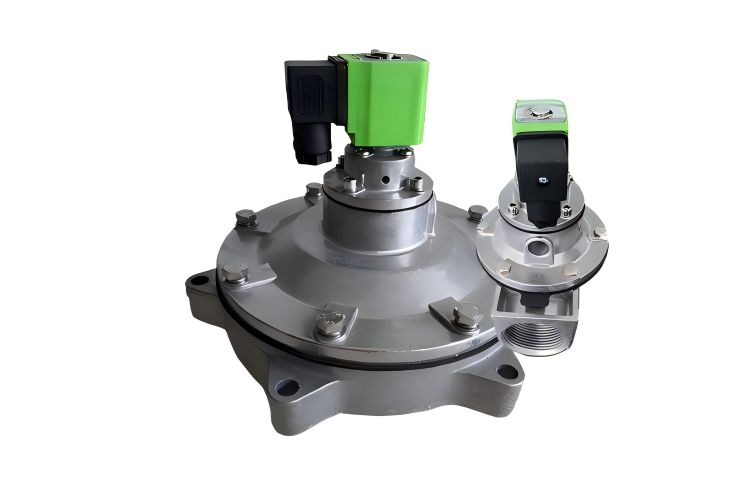
The submerged pulse valve derives its name from its installation inside the gas bag. This structure reduces flow path resistance and lowers the pressure of the blowing gas source, making it suitable for low-pressure applications. The pressure of the blowing gas source can be as low as 0.2-0.3 MPa, which can reduce energy consumption and extend the lifespan of the diaphragm.
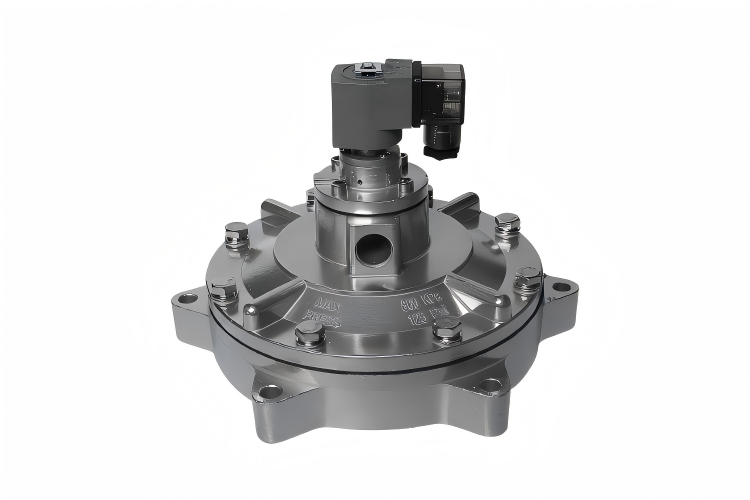
The centerlines of the air inlet and outlet of the straight-through pulse valve are aligned. Its advantage is convenient installation, and it is commonly used in air box pulse dust collectors; however, the disadvantage is that the airflow experiences greater resistance when passing through the valve body.
III. Precise matching based on operating condition parameters
When selecting a model, one should not rely solely on experience or a single parameter, but should conduct a comprehensive analysis based on specific operating conditions and parameters.
Operating temperature is an important basis for model selection.
For example, the right-angle pulse valve is typically suitable for use in environments ranging from -10℃ to 55℃. For special high-temperature or low-temperature environments, it is necessary to select diaphragm components with corresponding temperature resistance levels or specially customized products.
The selection of valve type is determined by the ash removal pressure requirement.
If the compressed air pressure provided by the system is relatively low (0.2-0.4 MPa), the submerged pulse valve should be preferred; if the pressure is sufficient (0.4-0.6 MPa), either the right-angle type or the straight-through type can be applied.
The characteristics of dust cannot be ignored either.
For dust with high viscosity and high concentration, a stronger dust removal capability is required, which necessitates a pulse valve with sufficient blowing volume and stable opening performance.
IV. Conclusion
The ash removal system of a bag filter is a complex whole, and the selection and configuration of pulse valves is not only a technical matter but also requires rich practical experience. From the design of the air distribution box to the arrangement of the injection pipes, and to the selection of pulse valves, every link affects the final ash removal effect. With the advancement of industry technology, it is believed that there will be more scientific and convenient methods to guide the selection and configuration of pulse valves in the future, promoting the development of industrial dust removal technology towards a more efficient and energy-saving direction.
If you need a customized electromagnetic pulse valve solution for your industrial dust removal project, please contact our technical team for free professional advice.
Phone/Whatsapp: +86 15863027667,info@trustyfilter.com
Send Inquiry



X
We use cookies to offer you a better browsing experience, analyze site traffic and personalize content. By using this site, you agree to our use of cookies.
Privacy Policy