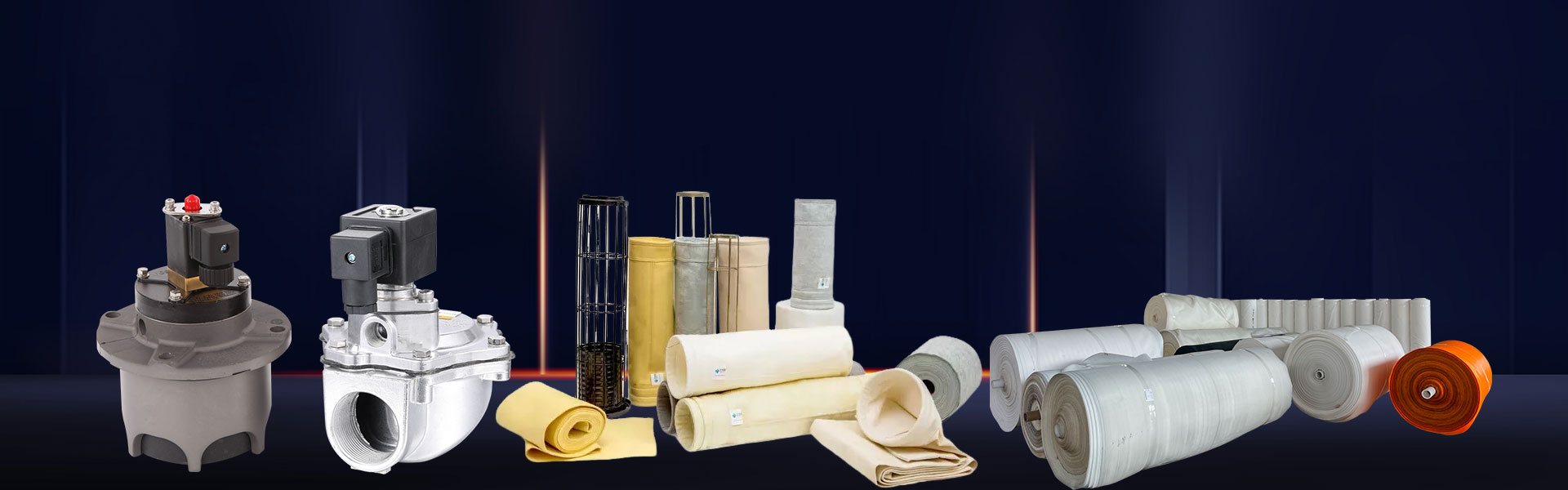
How to Choose the Appropriate Filter Cloth for a Filter Press
The filter cloth is the core component of the filter press filtration system, and its performance directly affects filtration efficiency, filtrate quality, filter cake shedding effect, and equipment operating costs. If the filter cloth is not selected properly, it may lead to problems such as decreased filtration rate, clogged filter cloth, difficulty in removing filter cake, and shortened service life.
Due to significant differences in slurry properties, chemical composition, temperature, and filtration requirements among different industrial conditions, there is no universal filter cloth suitable for all applications. When selecting filter cloth, a comprehensive evaluation should be conducted based on actual process conditions.
Factors to Consider Before Choosing Filter Cloth
Before determining the type of filter cloth, it is important to evaluate the following aspects:
- Chemical environment: including liquid pH value, acid-base concentration, and the presence of corrosive media.
- Working temperature: continuous working temperature and possible peak temperature.
- Slurry characteristics: particle size, solid content, abrasion resistance, and sludge viscosity.
- Filtration requirements: clarity of filtrate, moisture content of filter cake, and filtration rate.
- Equipment type: such as plate-and-frame filter press, box filter press, or other filtering equipment.
- Comprehensive cost: balancing procurement costs, service life, and maintenance expenses.
In addition, the aperture of the filter cloth is determined by the fiber thickness, yarn density, and fabric structure, which directly affects the filtration accuracy and speed. When the production process changes, the performance of the filter cloth should be re evaluated and tested.
Common filter cloth materials and characteristics
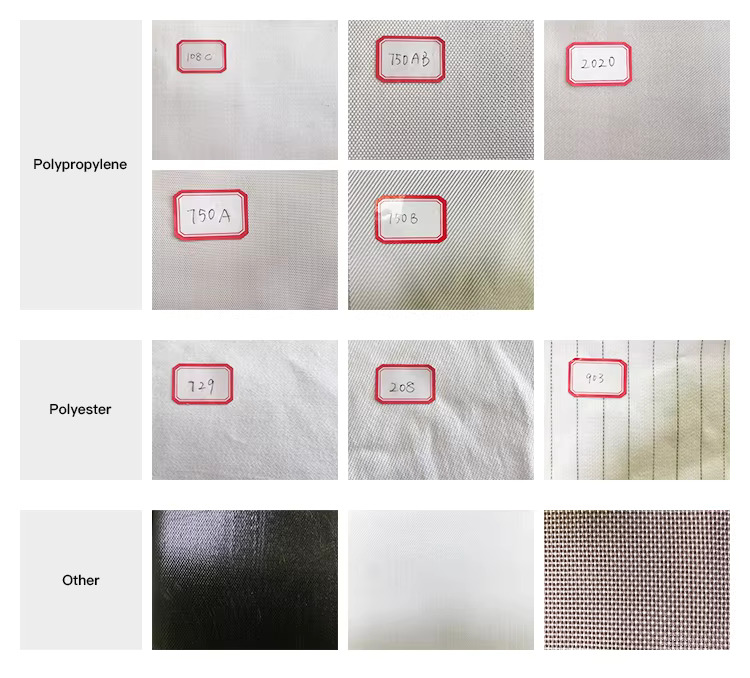
Polyester (PE) filter cloth
Polyester filter cloth has high mechanical strength and wear resistance, can work stably in an environment of about 150 ° C for a long time, and has good acid resistance.
Suitable for industries such as chemical, pharmaceutical, food processing, oil-water separation, and weakly acidic wastewater treatment.
Polypropylene (PP) filter cloth
Polypropylene has excellent acid and alkali resistance, extremely low moisture absorption rate, and easy filter cake detachment, making it suitable for highly corrosive filtration environments.
Widely used in mining dewatering, metallurgical waste liquid treatment, dye production, and wastewater treatment.
Nylon (PA) filter cloth
Nylon has excellent wear resistance and alkali resistance, can adapt to high wear conditions, and has good elasticity.
Mainly used in mining, coal washing, ceramics, and metallurgical industries, not recommended for use in the food and pharmaceutical industries.
Vinylon filter cloth
Vinylon has good alkali resistance and wear resistance, suitable for strong alkali environments, but relatively low acid and heat resistance.
Mainly used for ceramic processing, alkali chemical industry, and low-temperature metallurgical filtration.
Cotton filter cloth
Cotton filter cloth is a traditional filtering material with good sealing performance and pollution-free characteristics, but its acid resistance, heat resistance, and aging resistance are limited.
Suitable for low temperature, neutral media, and small-scale food processing.
Non woven polypropylene felt filter cloth
The needle punched felt structure has uniform micropores, which can achieve high filtration accuracy and good cake detachment performance.
Mainly used in coal washing, printing and dyeing wastewater treatment, bag filter, and fine chemical filtration.
Filtering performance of different yarn structures
In addition to the material, the structure of the yarn also affects the filtering effect.
Monofilament filter cloth has a smooth surface and uniform pores, which are not easily clogged, and the filter cake is prone to falling off, making it suitable for high cycle filtration conditions.
Multi fiber filter cloth balances strength and filtration performance, suitable for most industrial filtration applications.
Short fiber filter cloth has a high ability to retain fine particles, which can achieve higher filtrate clarity, but the filter cake is relatively difficult to remove.
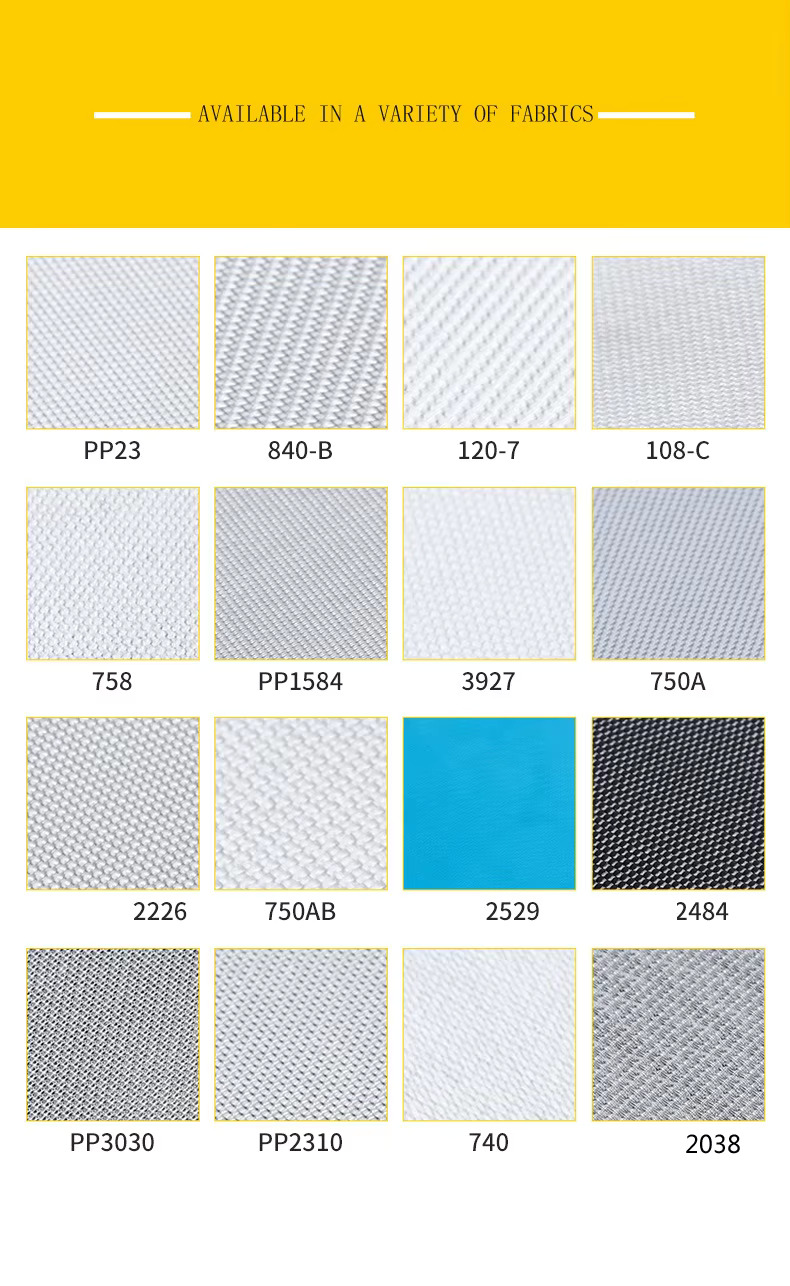
Comparison of Common Fabric Structures
Filter cloth usually adopts the following three weaving methods:
- Plain weave: Strong particle retention ability, suitable for fine filtration.
- Diagonal weave: Balancing filtration speed, particle retention, and cake detachment performance, it is one of the most widely used weaving methods.
- Satin pattern: Smooth surface, easy to peel off filter cake, suitable for high flow continuous filtration.
Most industrial filter cloths also undergo post-treatment such as heat setting and calendering to improve dimensional stability and service life.
Conclusion
The selection of filter cloth should comprehensively consider the chemical environment, temperature, slurry characteristics, and filtration objectives, and then match them with materials, yarn structure, and fabric organization. Reasonable filter cloth configuration can not only improve filtration efficiency, but also reduce maintenance costs and extend equipment operating cycles.
Send Inquiry



X
We use cookies to offer you a better browsing experience, analyze site traffic and personalize content. By using this site, you agree to our use of cookies.
Privacy Policy